
AI for JATS XML Authoring is becoming an important solution as scientific publications shift to digital formats. Since scientific publications are now mostly published digitally, journals can no longer rely solely on PDF files. They need to use machine-readable formats, and one of the most important standards is JATS XML. This format enables articles to be indexed properly by various platforms, including PubMed, DOAJ, EBSCO, Dimensions, and institutional repositories. The problem is that creating XML manually is not a simple task. The process requires a deep technical understanding of tag structures, validation rules, and DTD standards. Many journals end up being held back simply because they lack technical personnel who are proficient in XML.
With the advent of AI technology in XML creation tools, a process that was previously difficult can now be made faster and easier. This does not mean that AI completely replaces humans, but rather acts as an assistant that handles repetitive tasks such as parsing references, creating automatic citation links, and checking document structure. This article discusses how AI can reduce manual tagging work, accompanied by examples of its application when creating JATS XML using JATS Editor.
Problems That Arise When Creating XML Manually #
Writing XML manually requires a strong understanding of the structure and order of elements. Small errors, such as misplaced tags, can cause the file to fail validation. In addition, editors must memorize many tags such as <article-meta>, <ref-list>, <sec>, and <xref>, including how these elements are connected to each other.
When an article has many references, the complexity increases. Each citation must be tagged with <xref>, and the bibliography must be tagged with <ref> with consistent IDs. If the IDs do not match or are misspelled, the file may encounter errors when uploaded to PubMed or other indexing platforms.
Without the help of specialized tools, the manual process becomes slow, inefficient, and difficult to apply to large volumes of articles.
This is where AI comes in. AI in XML writing is not intended to automatically generate finished files without human intervention. In JATS Editor, AI functions as an assistant that helps suggest structures, detect errors, and recommend tags as the editor writes the article content.
Editors still write content through a regular text view, then AI translates the writing into XML markup according to JATS standards. This way, editors do not need to understand XML syntax, but still have full control over the final result.
AI does not determine the scientific content of the article; its task is only to speed up the technical part of the tagging process.
How AI shortens the workflow in JATS Editor #
One of the most significant changes in the JATS workflow is the separation between the writing display and the resulting XML structure. You no longer work directly on the code, but rather on an interface similar to a regular text editor. The structure of articles, titles, abstracts, methods sections, and citations is arranged through visual elements, rather than through manual tag writing.
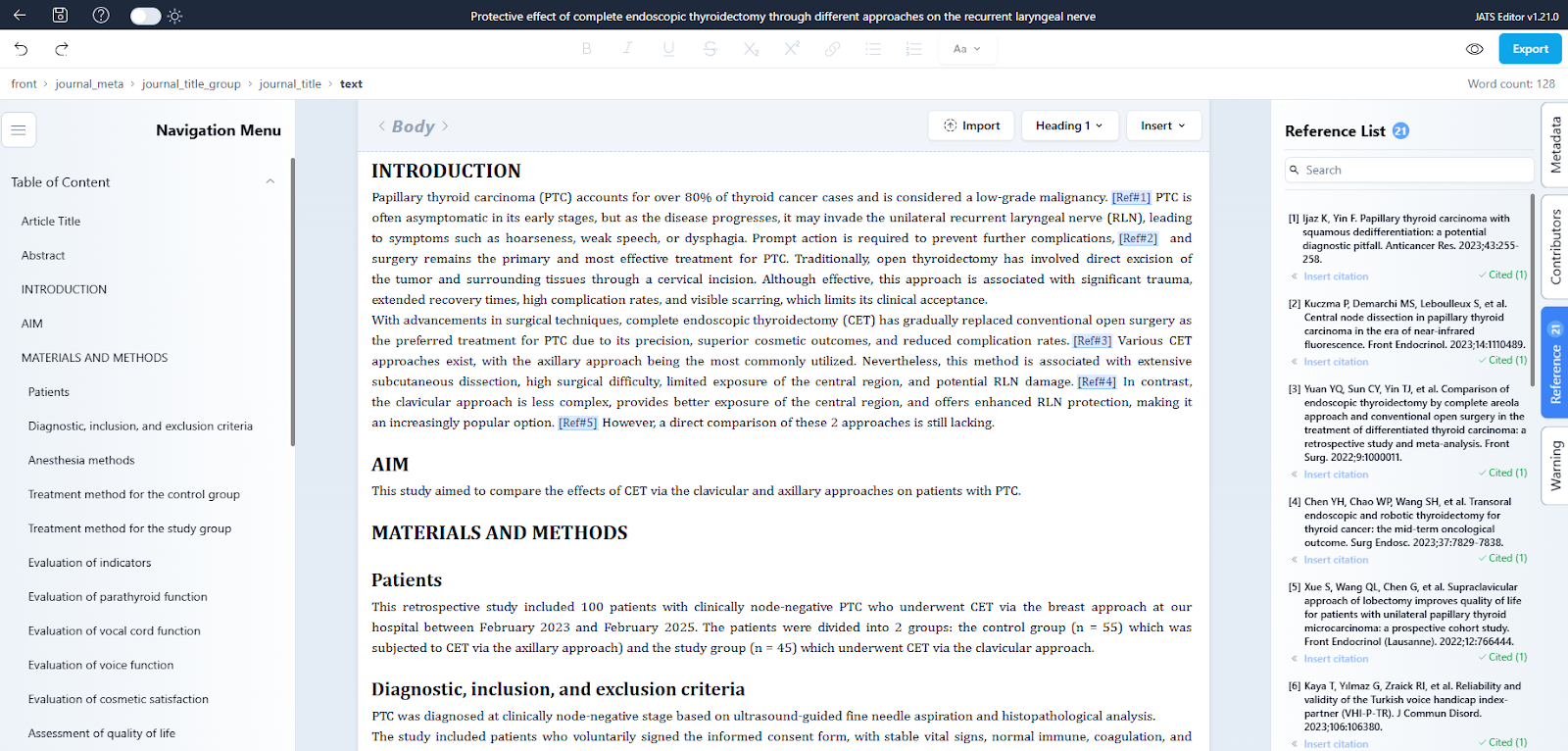
In the JATS Editor workspace view, users only see paragraphs, headings, and references as they would in a typical word processor document. For example, the “INTRODUCTION” section appears as a heading without displaying any XML tags. References within the text also appear as citations [Ref#1], rather than as <xref> elements.
However, in the background, each of these elements is mapped to an XML structure according to the JATS standard. When the file is exported, the same sections are converted to markup, such as:
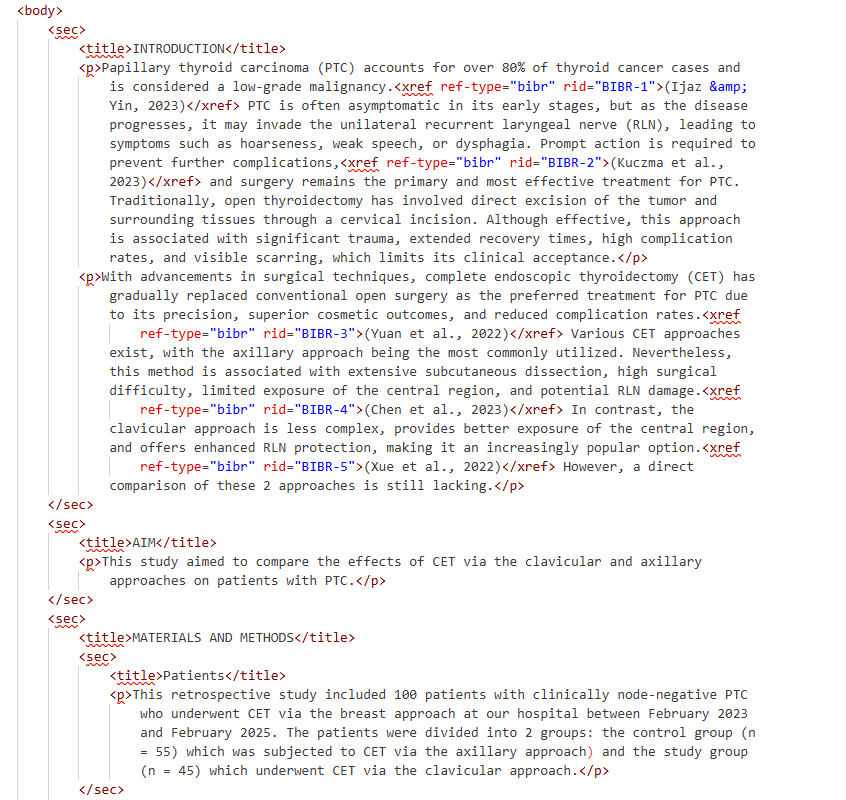
This difference shows that AI and editor systems act as a semantic layer, with editors writing based on content and logical structure, while the system converts it into valid tags without users having to manually type in markup.
Automatic Reference Parsing Without Manual Tagging #
One of the most time-consuming tasks in XML creation is converting reference lists into <ref> elements. Manually, each reference must be rewritten one by one in XML format, complete with author information, publication year, DOI, page numbers, and other publication details.
With the help of AI, this process can be much faster. Simply paste the reference list in plain text, and the system will recognize the citation format and automatically convert it into the appropriate XML structure.
Example of references in the article:

Export results in JATS Editor:
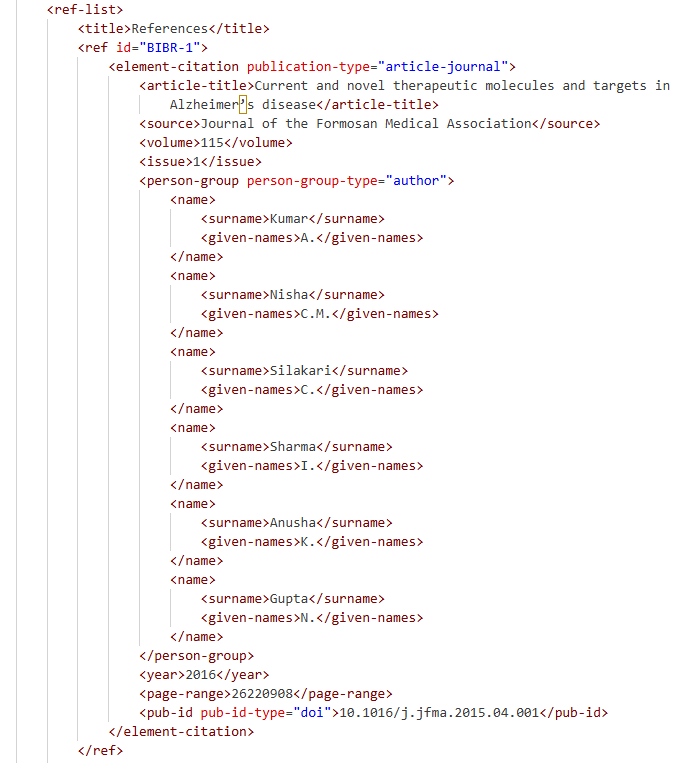
Without AI, editors must write all tags manually. In other JATS editors, users need to memorize the structure and tag names, then write them one by one for each section of the article. This approach is not beginner-friendly, time-consuming, and inefficient if the journal requires a fast XML production process.
Automatic Citation Linking #
In the manual process, each citation in the text must be tagged with a cross-reference one by one in order to be linked to the bibliography. This is very time-consuming, especially when using numerical citation styles such as [1], [2], [3] that appear repeatedly. With the help of AI, citations in the text can be automatically recognized and directly linked to the appropriate references, without the need for manual tagging of each citation.
Example:
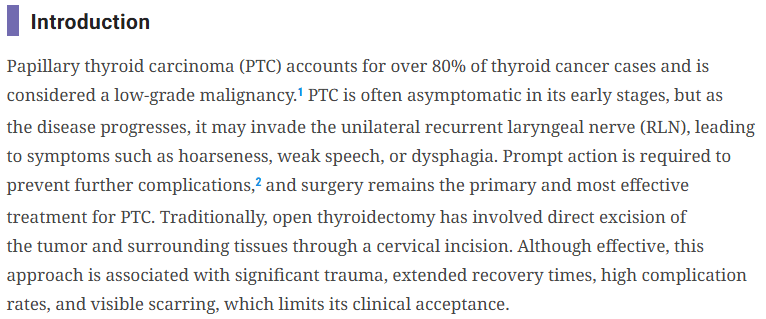
Source: VIDEOSURGERY AND OTHER MINIINVASIVE TECHNIQUES
Export results in JATS Editor:
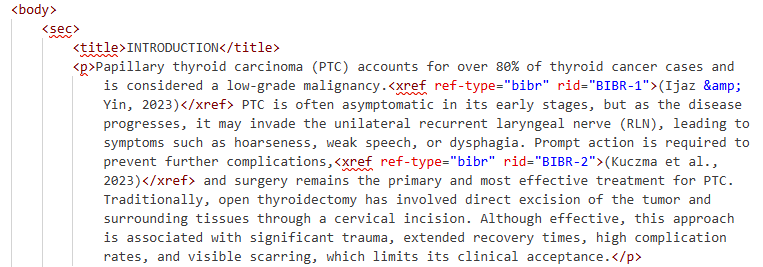
Real-Time Structure Validation #
If validation is performed after the XML is complete, structural errors are often only discovered when sending the file to indexing. AI changes this process to validation during writing. If a required tag is missing, the structure is inconsistent, or an element is in the wrong position, the system issues a warning before export.
Case example:
The editor forgot to include the Article URL.
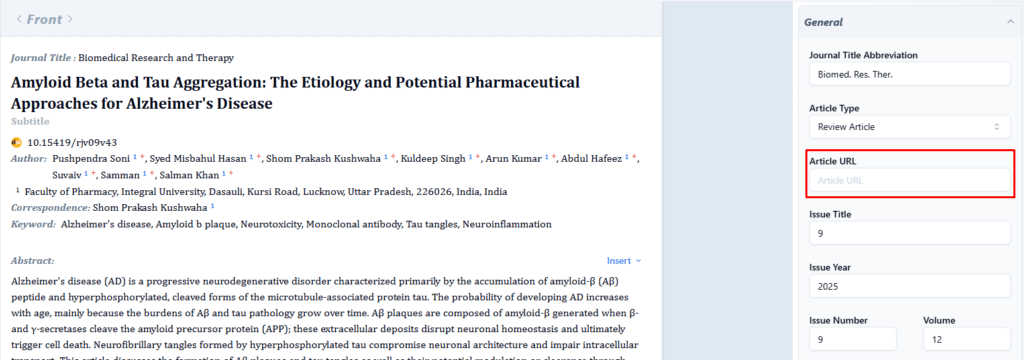
Before you export your JATS in JATS Editor, the system will shows pop up notifications:
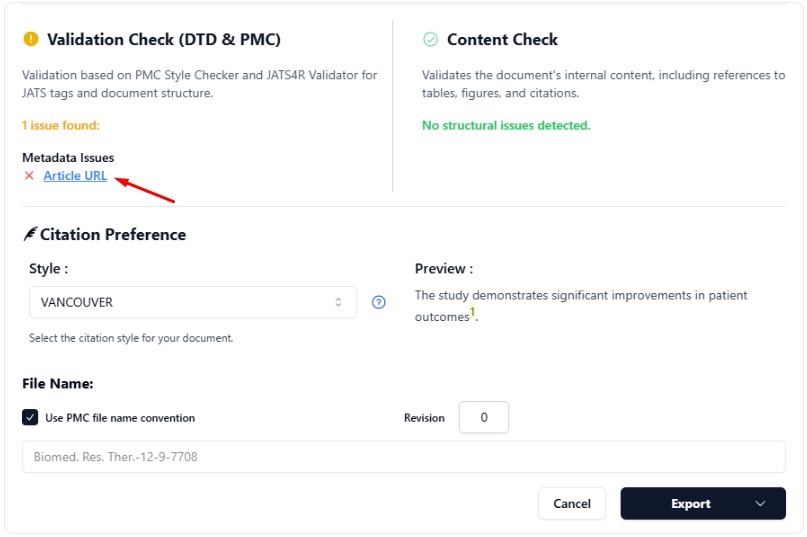
In a manual workflow, editors must first run the validation process, then search for problematic sections in the document themselves, scroll to the location of the incorrect tag, and then fix it manually. This process is time-consuming and prone to repetition if there is a lot of metadata that has been missed.
With an automated approach like JATS Editor, the system automatically flags elements that are missing information, such as article URLs, and displays clear notifications. Editors don’t need to search for errors throughout the document; they simply fill in the flagged sections and revalidate.
Conclusion #
AI in JATS XML writing changes the process from one that is usually code-based to an editorial process that focuses on structure. Editors can work through a normal text display without typing XML tags directly, while the system automatically builds markup according to standards, links citations, validates structure in real time, and produces XML that is ready for indexing. This approach does not replace the role of editors, but speeds up and simplifies technical work that previously required special expertise.
By separating the editorial view from the XML output, editors and researchers can focus on scientific content without having to understand the technicalities of JATS. However, they can still check and correct the structure if necessary, so that metadata and scientific accuracy are maintained.
For journals that want to consistently produce JATS XML without forming a technical team, AI-based editors such as JATS Editor can be a realistic solution. This approach accelerates the XML creation process, reduces errors, and ensures compatibility with international indexing platforms.


